


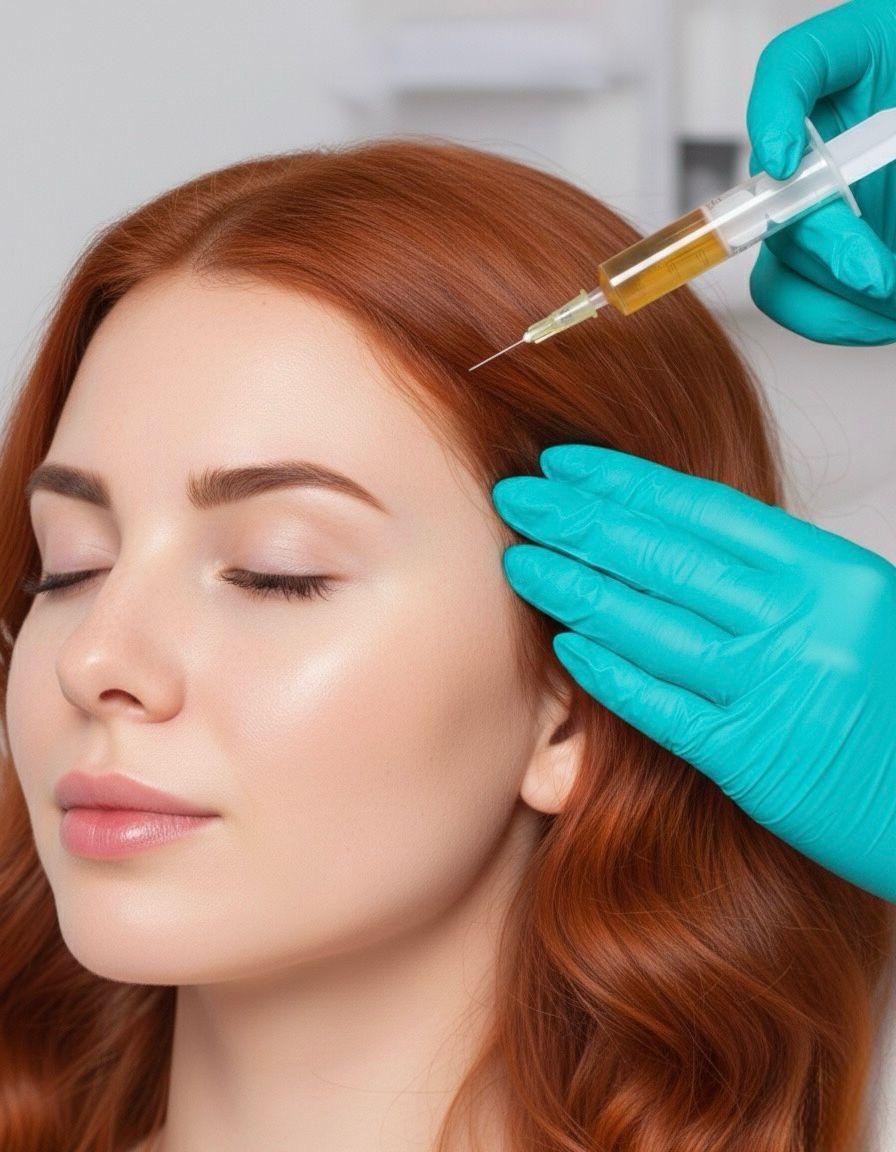
PRP therapy, often referred to as vampire lifting, uses your body's own platelet-rich plasma to enhance skin vitality and support hair growth. A small amount of blood is drawn and processed to extract PRP—plasma rich in growth factors that stimulate tissue repair and rejuvenation.
PRP is widely used to address signs of ageing such as fine lines and skin laxity, and it is also a beneficial option for hair thinning and hair loss by nourishing the scalp and revitalising follicles for thicker, healthier hair.
A natural solution for skin and hair
As a minimally invasive, biocompatible procedure, PRP therapy offers a safe and natural approach to aesthetic enhancement, with lasting results and no synthetic substances or lengthy downtime.

Personalized care
Treatments tailored to your goals and anatomy.

Expert techniques
Latest methods for natural, lasting results.

Safe & effective
Minimal downtime and proven outcomes.
Whether you want a more youthful complexion or fuller hair, this treatment can deliver noticeable, long-lasting results tailored to your needs.
Skin rejuvenation & hair restoration
PRP boosts collagen production, accelerates cell regeneration, and improves overall skin and hair health. Our specialists tailor the protocol to your concerns and goals.
Consultation
We assess your needs and plan your treatment.
Treatment
Precise, comfortable procedures at our clinic.
Aftercare
Guidance for optimal recovery and results.
Got questions? we've got answers!
PRP (platelet-rich plasma) therapy uses growth factors from your own blood to stimulate skin repair and hair growth. It is often called vampire lifting or vampire facial.
Yes. Because PRP comes from your own blood, the risk of allergic reaction or rejection is minimal. It is a well-established treatment in aesthetics and sports medicine.
A course of 2–4 sessions is typical for skin or hair, spaced a few weeks apart. Your practitioner will recommend a plan during consultation.
Skin may look fresher within a few weeks. Hair results usually develop over several months as the growth cycle responds to treatment.